

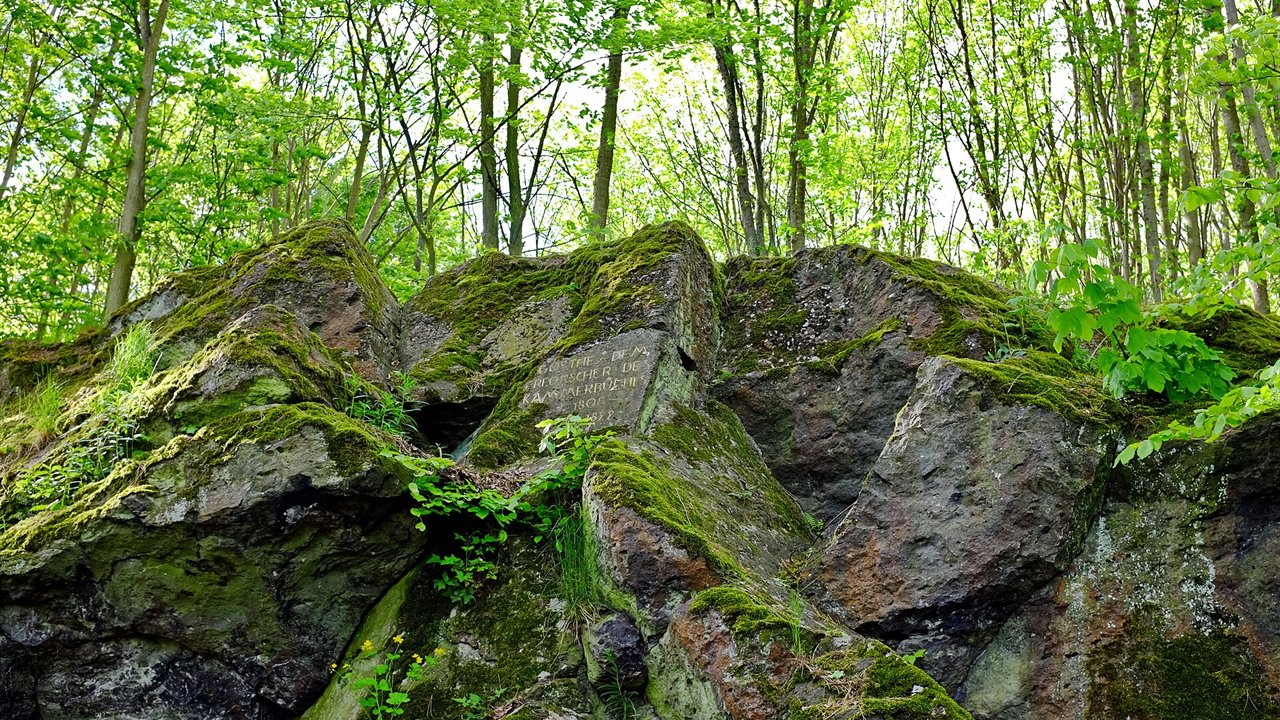
Komorní hůrka – a volcano near Františkovy Lázně
This low wooded hill between Cheb and Františkovy Lázně is one of the youngest volcanoes in Bohemia. Goethe came here looking for an answer to the question of how rocks are formed, and a gallery dug after his death settled the dispute. A short trail leads to a quarry where you can see inside the volcano.
The story of the place
Komorní hůrka (German: Kammerbühl) is a small volcanic cone, about 200 metres across and only around 30 metres higher than the road nearby. It erupted several hundred thousand years ago; estimates of its age range from about one hundred thousand to five hundred thousand years. First the magma met groundwater and explosions threw out ash; then the volcano spat lava and scoria bombs. The quarry walls show layers of lava and ash, and volcanic bombs up to half a metre across.
In 1766 Count Zedtwitz had a gallery about a hundred metres long dug into the hill, looking for coal. In 1773 the naturalist Ignaz von Born described it as an extinct volcano. That was not obvious at the time: scientists were arguing over whether rocks formed by settling in the sea (the Neptunists) or from the hot interior of the Earth (the Plutonists).
Johann Wolfgang Goethe joined the debate. He came to Komorní hůrka repeatedly — a memorial inscription on the rock gives the years 1808, 1820 and 1822. He proposed digging into the hill, because only that would show what was inside. In 1822 he met Count Kaspar Sternberg and the Swedish chemist Jöns Jacob Berzelius here.
Goethe died in 1832. Sternberg then put his idea into practice and paid for an exploratory gallery, dug in 1834–1837. It struck the solidified volcanic neck through which lava had once risen, and settled the dispute in favour of the Plutonists. Above the entrance an inscription still records that Sternberg dedicated the gallery to the friends of nature. A relief of Goethe by the sculptor Adolf Mayerl was added in 1932.
The "crater" that visitors see today was actually made by quarrying. The loose volcanic material was used for building and for the paths in the spa parks of Františkovy Lázně. The hill has been protected since 1933 and is now a national nature monument. Protection covers not only the volcano and the old galleries but also meadows, beech woods and a habitat of the rare green-winged orchid.
Key dates
- 1766the first gallery into the hill, in search of coal
- 1773Ignaz von Born describes an extinct volcano
- 1808, 1820, 1822Goethe at Komorní hůrka
- 1834–1837Sternberg's gallery reaches the volcanic neck
- 1933the hill is protected for the first time
What you will see
- The abandoned quarry on the cleared eastern side: layers of scoria and ash, with volcanic bombs right in the wall.
- The entrance to Sternberg's gallery with its inscription from 1837. Most of the old tunnels have collapsed.
- Goethe's relief from 1932 and the inscription with the years of his visits.
- A nature trail with boards on the history of research and on how the volcano formed.
- Guided tours run by the Františkovy Lázně cultural centre (Městské kulturní středisko), including a visit into the gallery wearing a helmet. They are paid, booked by phone, for up to 15 people and for children from 6.
Practical tips
- From Háj: about 45 minutes by car (46 km).
- Getting onto the trail: there are two entrances, by the roads to Klest and to Slatina; the one by the Klest road is recommended. Parking is limited.
- On foot from Františkovy Lázně on the red-marked trail, just under 3 km; from Cheb about 2 km. A loop via Klest is about 7 km.
- Pushchairs and bikes are not suitable on the trail; the path is unpaved.
- This is a national nature monument: don't take anything away, neither rocks nor plants.
- It combines well with Františkovy Lázně or the Soos nature reserve.
Make a day of it
Stay 26 km away
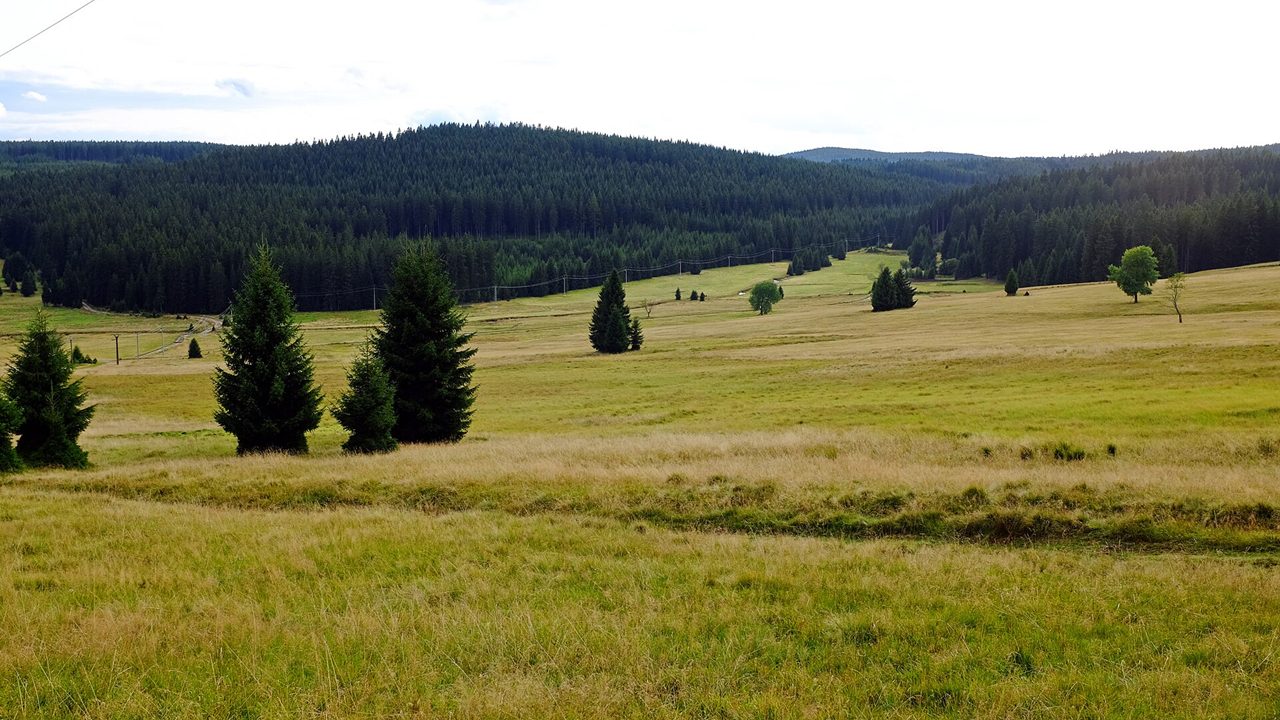
Roubenka Háj is 26 km away as the crow flies. Log cabin for 6 guests to rent in Háj near Kraslice, Ore Mountains, 18 km from Karlovy Vary. Gazebo, trampoline for kids, peace all around. Dogs welcome.