

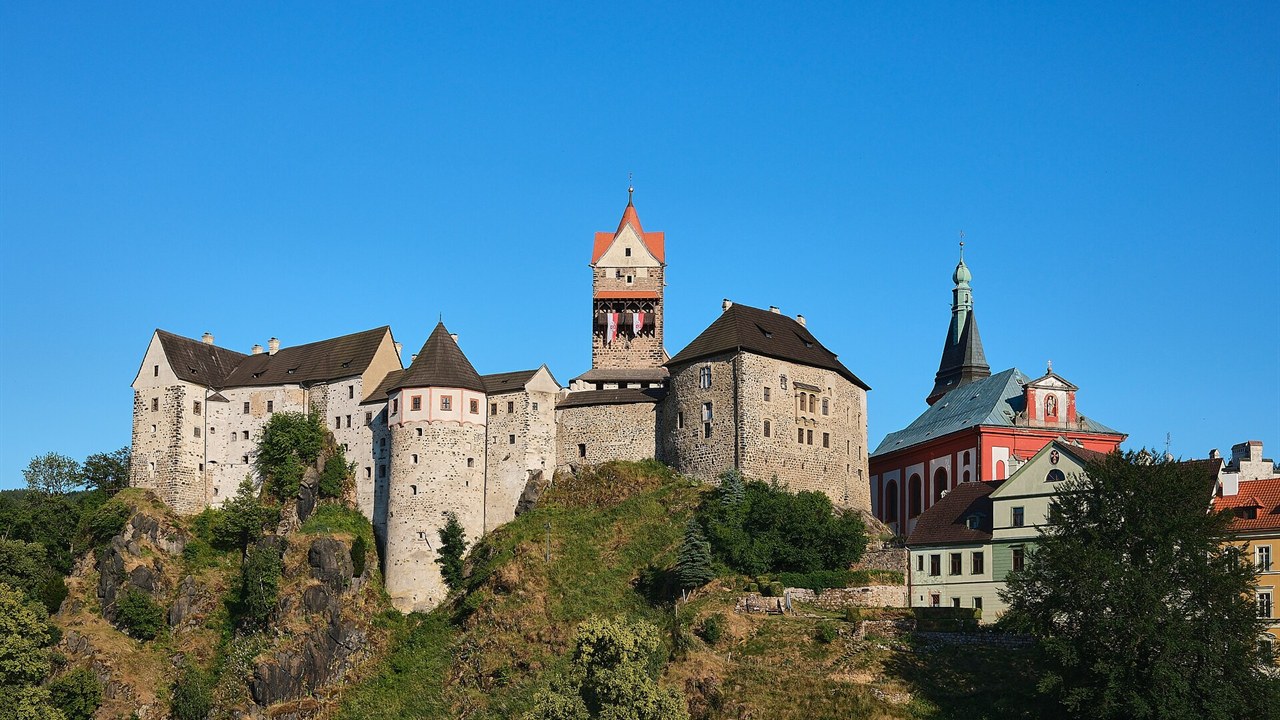
Loket Castle
The stone castle on a rock above the Ohře river was built as early as the turn of the 11th and 12th centuries. The future Emperor Charles IV was held here as a three-year-old, and until 1948 it was a prison. Below the castle lies a small town, and above it an hour's walk along viewpoints.
The story of the place
Loket is older than was long believed. In 2025 archaeologists dated food residues in medieval pottery by radiocarbon — the first time this was done in the Czech Republic — and moved the castle's origins back by about a hundred years, to the turn of the 11th and 12th centuries. Unusually for Bohemia at the time, it was built entirely of stone and mortar from the start. Loket is first mentioned in writing in 1227.
From the Romanesque period a 26-metre tower survives, along with the remains of the castle rotunda. The rotunda was only rediscovered in 1966; inside it measures just 3.6 metres across, and the castle presents it as the smallest rotunda in the world.
In 1319 the three-year-old Wenceslas, later Emperor Charles IV, was held at the castle. According to tradition, Charles discovered the springs of what became Karlovy Vary (Karlsbad) while staying at Loket. The Hussites besieged the castle but never took it. From 1434 the Schlick family held it in pledge. Around 1600 it passed to the burghers of Loket and was used mainly for farming and storage. In 1607 Jiří Popel of Lobkovice, a former high steward of the kingdom, died in its prison.
From the 1820s the castle was a prison; the cells from 1822–1948 survive. In 1968 it was handed to the state heritage institute, in 1992 it returned to the town, and it opened to the public soon after 1989.
In 1823 Johann Wolfgang Goethe celebrated his 74th birthday in Loket in the company of the young Ulrike von Levetzow. He was also interested in the Loket meteorite, an iron stone that according to legend fell into the castle courtyard. People called it the Cursed Burgrave: the story goes that it was a burgrave turned to stone. During the Thirty Years' War it was supposedly thrown into the well so that the Swedes could not steal it. It originally weighed more than a hundred kilograms; the largest part is now in Vienna, while the castle keeps a piece of about fourteen kilograms and a copy.
Key dates
- turn of the 11th and 12th centuriesthe stone castle is built
- 1227first written mention of Loket
- 1319the three-year-old Wenceslas, later Charles IV, is held at the castle
- 1822–1948the castle serves as a prison
- 1823Goethe celebrates his 74th birthday in Loket
- 1992the castle returns to the town of Loket
What you will see
- Guided tours in Czech, English, German and Russian, or explore on your own with texts in ten languages.
- The Loket collections: furniture, an old pharmacy, sculpture, minerals and a piece of the Loket meteorite.
- A torture chamber in the former prison cellars with life-size moving figures and sound.
- Arms and armour, 19th- and 20th-century porcelain and Gothic wall paintings from the early 15th century, discovered in the 1990s.
- The Romanesque tower and the remains of the rotunda.
- A cultural and creative centre with traditional crafts (porcelain, blue-print fabric, gingerbread moulds) and daily workshops, opened at the end of 2025.
- The Black Tower near the castle, a former watchtower of the town walls with a view over the town. Separate ticket, open in summer only.
Practical tips
- From Háj: about 30 minutes by car (20 km).
- Parking: you cannot park at the castle. The nearest car park is P2 on Sokolovská street by the petrol station (about 8 minutes' walk). Outside events, P1 Sportovní is free (about 20 minutes' walk); there are paid spaces on the square.
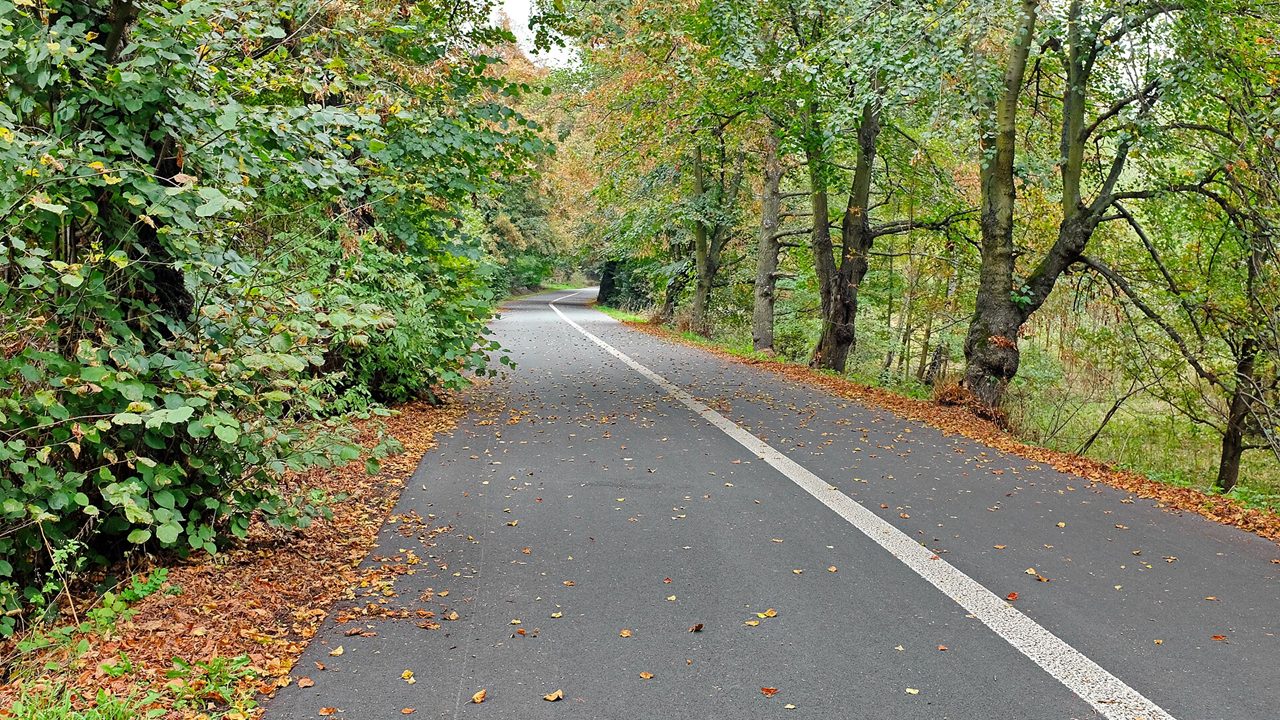
- By bike: along the Ohře cycle path; there are bike stands in front of the castle.
- Dogs are not allowed in the castle; animals stay outside the gate.
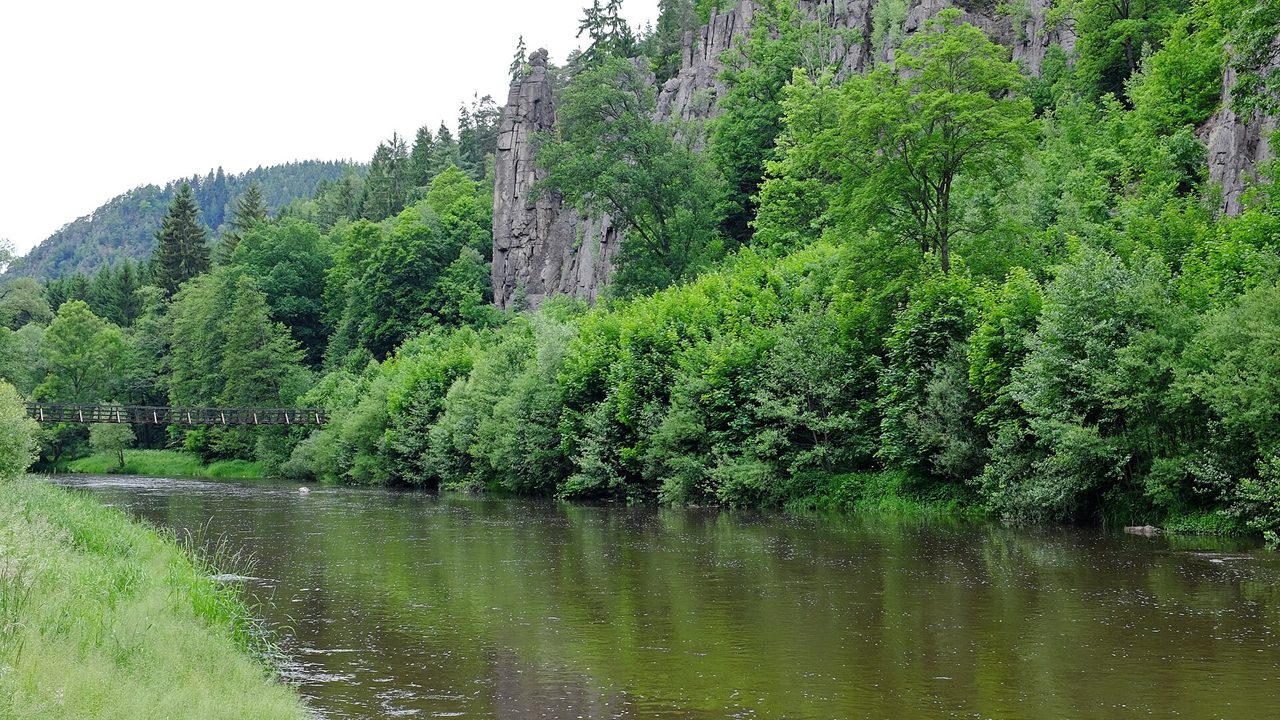
- Nearby: an hour's loop above the town past the Goethe and Schwarzenberg viewpoints and over a suspension footbridge. The Svatošské skály rocks are about 6 km along the Ohře.
Make a day of it
Stay 13 km away
Roubenka Háj is 13 km away as the crow flies. Log cabin for 6 guests to rent in Háj near Kraslice, Ore Mountains, 18 km from Karlovy Vary. Gazebo, trampoline for kids, peace all around. Dogs welcome.