

Krásno Mining Museum
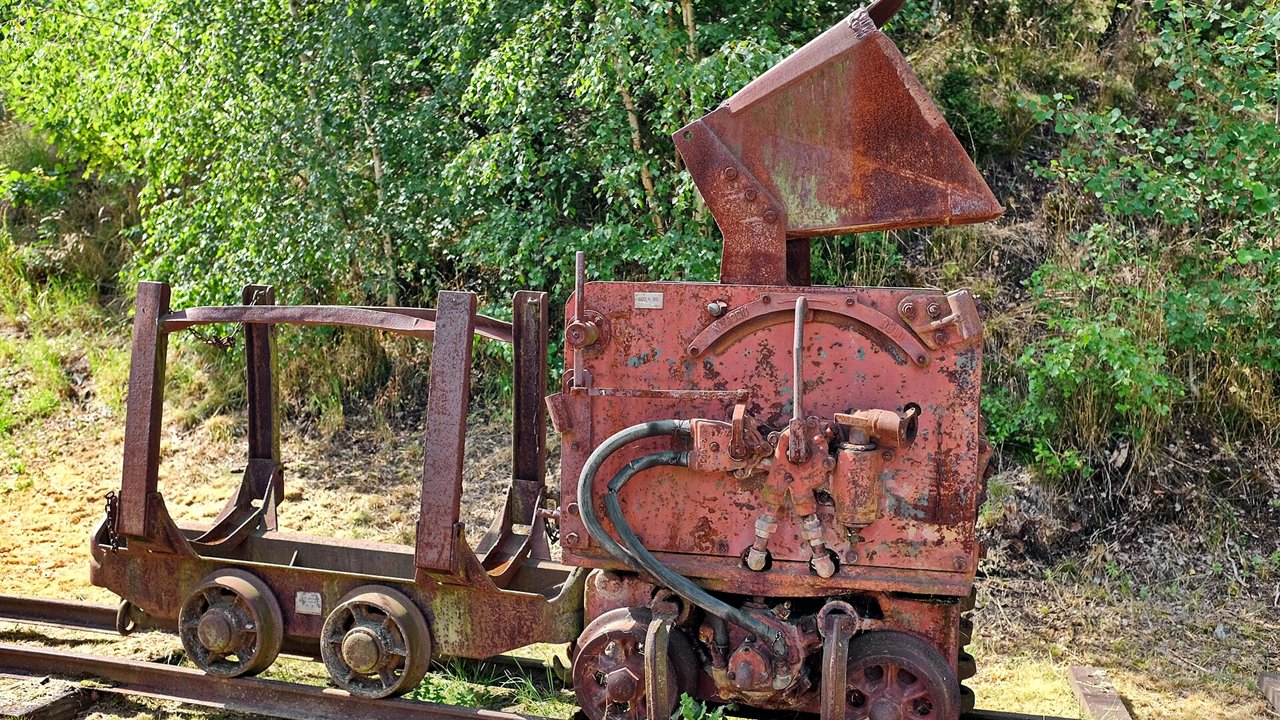
At the former Vilém (Wilhelm) tin mine in Krásno, the headframe, engine house and workshops stand almost as the miners left them. You will see a steam winding engine from 1897, a demonstration adit and dozens of mine wagons and locomotives; in season a mine train runs. It is an open-air museum, not a museum behind glass.
The story of the place
Krásno (German: Schönfeld) grew from a mining settlement in the Slavkov Forest. The first reliable documents date from the 14th century; in 1355 it became a small town with mining rights, and in 1547 Ferdinand I made it a royal mining town. Tin was the main ore here. For the mines in Krásno and Horní Slavkov, miners dug the Dlouhá stoka in 1531–1536, a long canal that brought them water; since 2014 it has been a national cultural monument.
The Vilém mine was built on the site of a medieval tin mine. It went up in 1915, when raw materials were scarce during the First World War, and was equipped with what was then the most modern technology, much of which survives. It closed as early as 1921. The Krásno deposit was reopened on a large scale in 1955. Until 1970 the ore came up the Vilém shaft, then through the new main Huber shaft, and mining ended in 1991. Since 1995 the mine has been a protected cultural monument — according to the National Heritage Institute, the last monument of tin mining in western Bohemia.
After mining ended, the Sokolov Museum took over the buildings. The first exhibition opened in 1998 in the former tin-ore sorting plant; its centrepiece is a steam winding engine from 1897 from the Marie mine in Královské Poříčí. It worked until 1994, and the roof had to be removed to bring it in. In 2004 a neighbouring area with mine locomotives and wagons of three gauges was added: 450 and 600 millimetres from the underground mines of the Slavkov district and 900 millimetres from the brown-coal pits around Sokolov. Among the equipment is a transformer station with original 1940s fittings, one of the oldest mine transformer stations in the country.
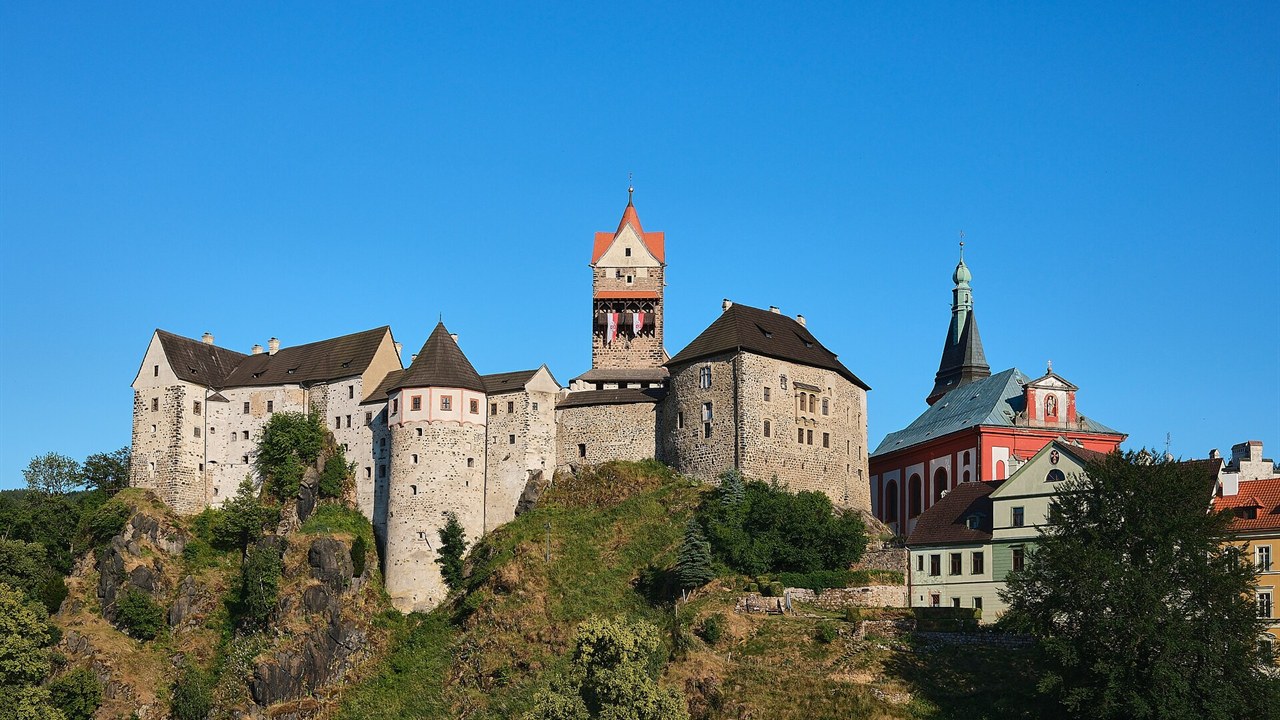
The museum in Krásno has a longer history than it seems: the first one was founded as early as 1937, but after the war its collections were scattered and part of them ended up at Loket castle.
Key dates
- 1355Krásno becomes a small town with mining rights
- 1547Krásno becomes a royal mining town
- 1915the Vilém mine is built
- 1991mining in Krásno ends
- 1998the museum's first exhibition and the steam winding engine
- 2004the area with mine locomotives opens
What you will see
- The steam winding engine from 1897 in the former ore sorting plant.
- The headframe, engine house, workshops and transformer station with the original equipment of the Vilém mine.
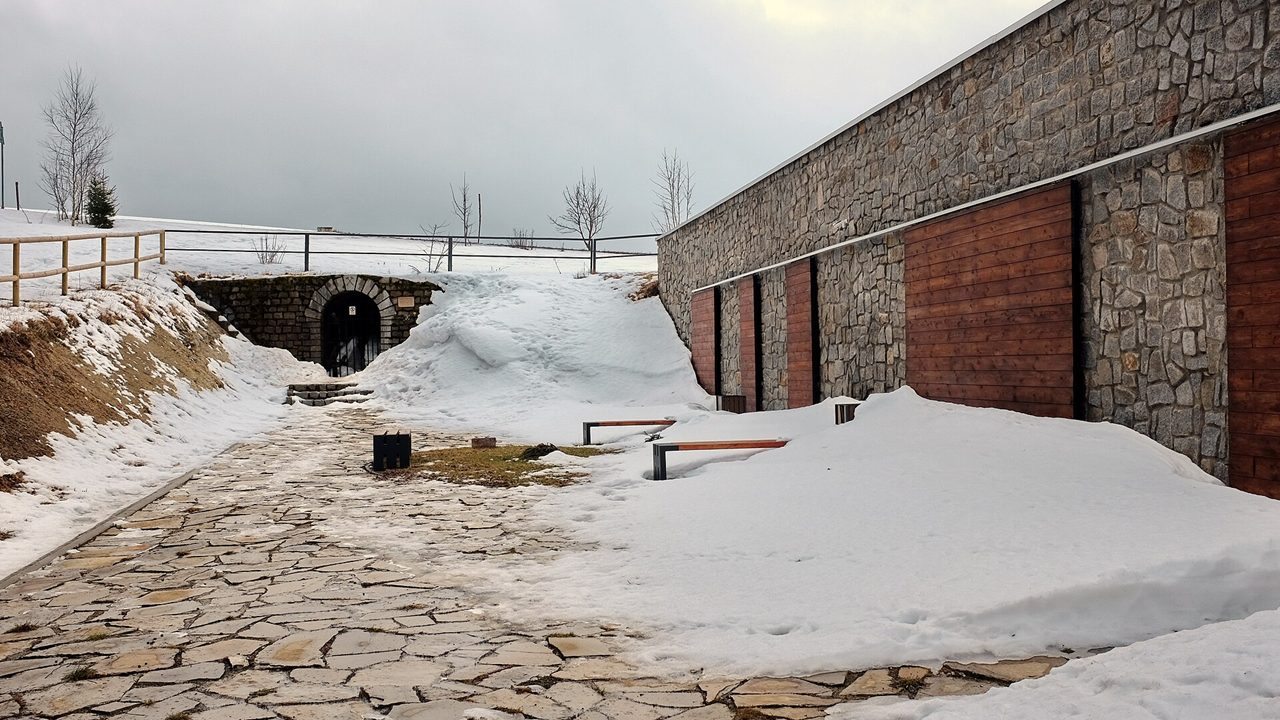
- A demonstration adit about 40 metres long with miner figures.
- The mine train and locomotives and wagons of 450, 600 and 900 mm gauge.
- Exhibitions on ore and coal mining, mine rescue and villages lost to mining, minerals from the Slavkov Forest, a large model of a mine after Georgius Agricola and a 16th-century miner's boot.
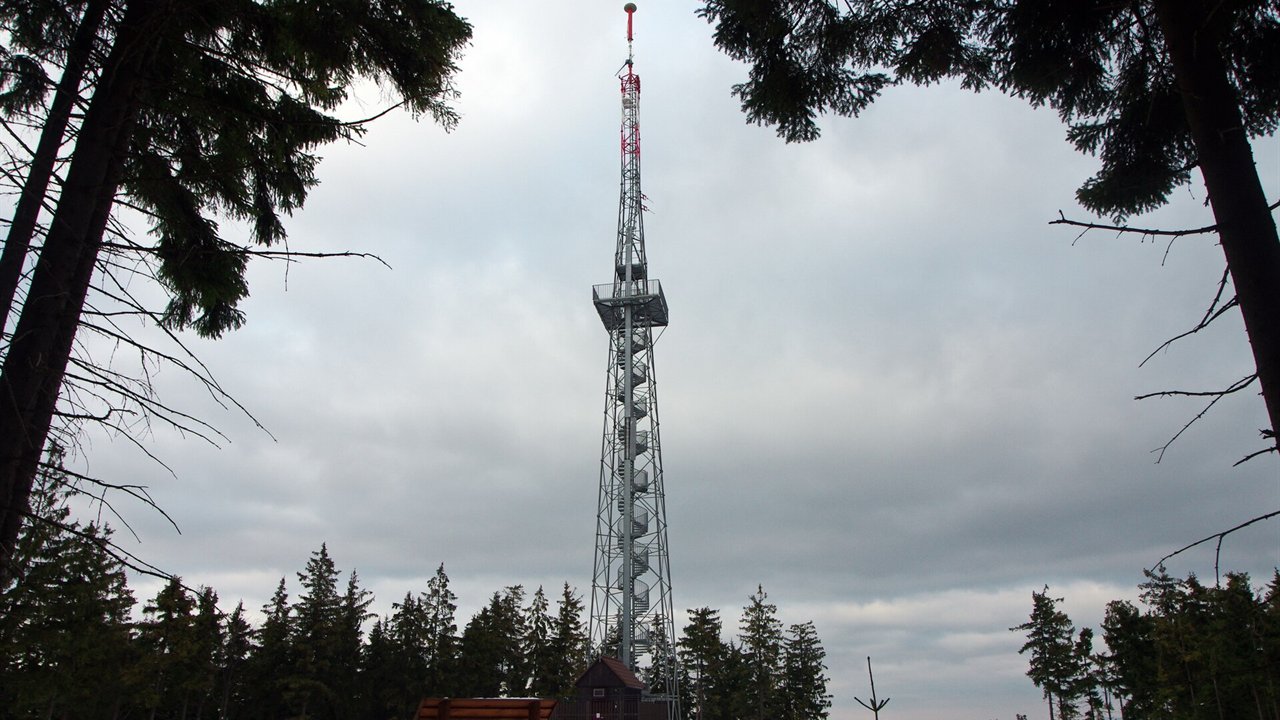
- Nearby the lookout tower on Krásenský vrch and the Dlouhá stoka canal.
Practical tips
- From Háj: about 40 minutes by car (31 km). Turn off road 209 towards Háje — a different Háje from ours; parking in front of the museum is free.
- By bus: the stop in the centre of Krásno is about a kilometre from the museum.
- Season: March to October. The mine train runs from spring to autumn in good weather only; it does not run in the rain, for safety.
- Cash only. No food is sold on site; there are restaurants in Krásno (about 1 km) and Horní Slavkov (4 km).
- The main building, the outdoor areas and the ground floors of the buildings are wheelchair accessible; an accessible toilet is in the upper part of the site.
- It combines well with the Jeroným mine (about 6 km) or the Krudum lookout tower.
Make a day of it
Stay 21 km away
Roubenka Háj is 21 km away as the crow flies. Log cabin for 6 guests to rent in Háj near Kraslice, Ore Mountains, 18 km from Karlovy Vary. Gazebo, trampoline for kids, peace all around. Dogs welcome.